Part Three: the Hart Family

Merchant Plunder, Embezzlement and the move to Marvellous Melbourne...
The final part of the family’s association with India is taken forward from the marriage in 1804 of Lt Colonel Thomas Paterson’s eldest daughter Camilla Porterfield Paterson to the Madras merchant William Main Hart. The marriage is recorded as taking place at Vellore Fort on the 26 August 1804 by the ‘Town Major’ in control of the Fort, Thomas Marriott. Camilla (called ‘Matilda in the record) is only 16 years old, while William Main Hart is by then well-established in Madras and 20 years her senior at 37 years of age.
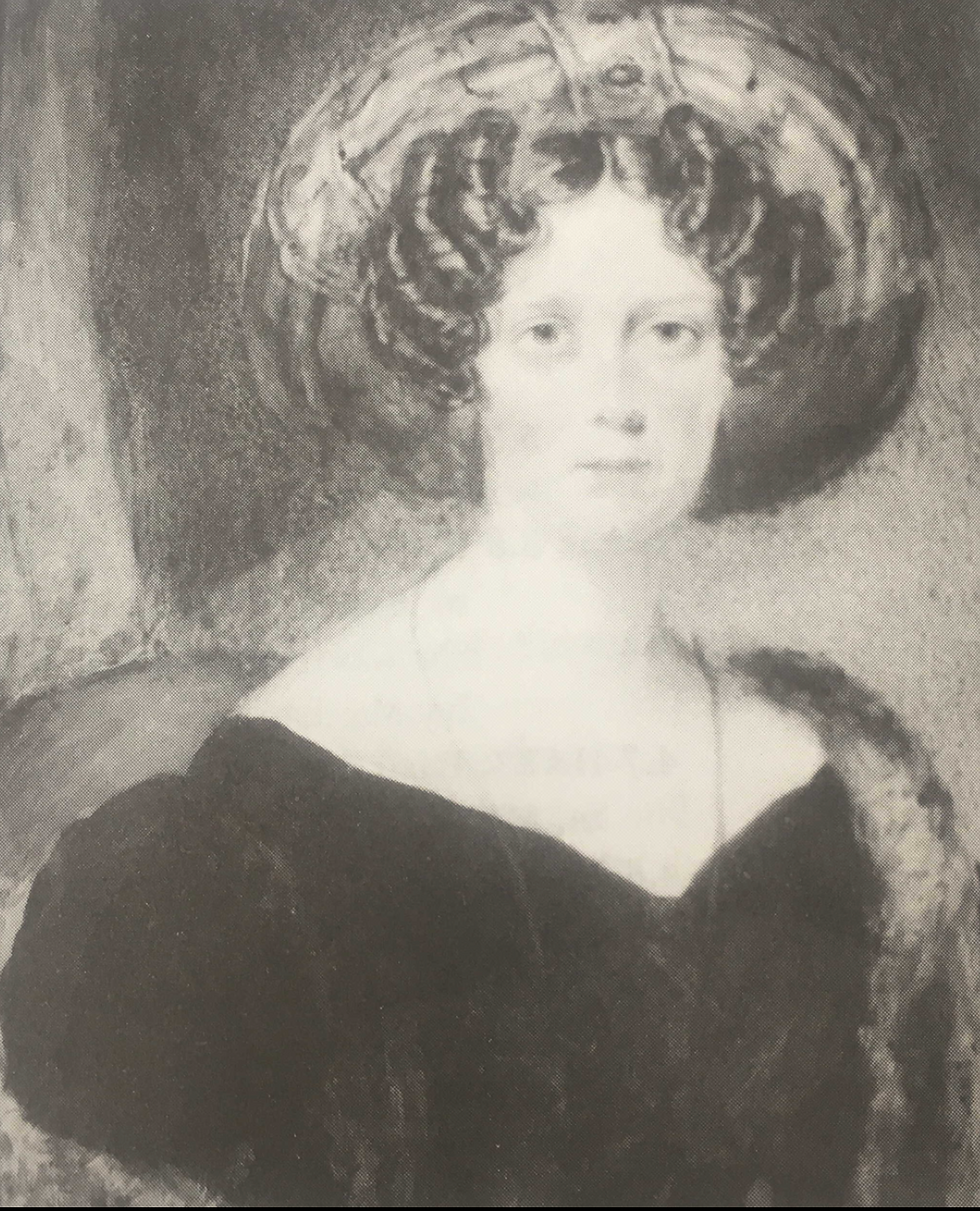
It is not clear why the marriage takes place at Vellore – a town which today is about a three-hour drive inland from Madras. William Main Hart has no obvious connections there, and Thomas Paterson’s regiment did not seem to be stationed there. Following the Battle of Seringapatam, however, it does become the residence of Tipu’s captured court – and particularly its female members. It may have been that residing alongside the Harem were other female members of East India Company families, including the young Camilla presumably with her mother Anne. An important rebellion occurs at Vellore shortly after the marriage in July 1806 which is taken to be a foretaste of the 1857 Mutiny. By this date, however, Colonel Paterson had retired and presumably moved with his wife Anne to England – they do not appear to have been involved in the rebellion.
Vellore Fort Vellore Fort Sacred Cow Enclosure at Vellore Fort Vellore Fort
Nevertheless, it is a puzzling location for the marriage – such a distance from Madras where Hart was so well-established, to be married by an East India Company official rather than a clergyman, in a prison-palace rather than a chapel or church.
William Main Hart is born on the 17 April 1767 in Kirkinner, Dumfries, Scotland where his father, who died the year he was born, is the Presbyterian minister for over two decades. His other siblings have connections to India: his brother Thomas Hart (1760-1840) was a Major and Commissary of Grain to the Army at Seringapatam; his sister Mary Hart married at Canongate, Edinburgh on 19 January 1791 the Captain of the Madras Cavalry William Shirriff, whose daughter Mary Ann (1800-1868) marries in 1824 Camilla Porterfield Paterson’s younger brother Thomas William Paterson (1790-1831).

It is possible that William Main Hart arrived in Madras as early as 1791, however he is certainly established by 1794 when he is elected to the Committee of the Tontine. He is connected to the English merchant firm of Colt, Baker & Co., and is mentioned in the Journal of Belisarius in 1799-1800:
“The merchants of Madras are principally English in the Fort and Portuguese, Armenians and natives in the Black Town. Of the English Houses, Colt, Baker & Co. do the most business with Americans. Colt, from being a writer in the Company’s service, has returned to Europe with a fortune of 200,000 pounds sterling. Baker has an office under the Company, whose legal emolument is 3000 pounds per annum. Mr. Hart, the junior partner, does most of the business of the house. This and indeed most of the English houses are very rich.”
William Main Hart becomes involved in a scandal involving his brother Major Thomas Hart, who is accused of embezzling East India Company funds by procuring grain from his brother (a familial connection he does not disclose but rather describes him as a “a merchant who yields to no man in reputation”) to the value of 5,000 Star Pagodas and then selling it for private gain. The procurement is meant to feed the travelling British and East India Company army, together with their large accompanying retinue, on the way to the Battle of Seringapatam.
Major Thomas Hart endeavours to clear his name of the accusation in a series of pamphlets and open letters addressed to Commander-in-Chief General George Harris.

Major Thomas Hart, however, is able to profit otherwise from the looting that followed Seringapatam. In 2019 a haul of booty was found in a dusty attic of his descendants, including Tipu’s gun, a gold betal box, signet ring made for Hart with his name inscribed in Persian, and Tipu’s swords. It was estimated to be worth millions of pounds and was sold at auction.
Tipu's Gun Gold Betal Box Thomas Hart Signet Ring
William Main Hart lived with his family in the then fashionable Madras suburb of Egmore. Fortunately, due to contemporary descriptions and records, the location of their house can be exactly determined.
Hart Residence Egmore Today
Adjacent to ‘Casamajor Road’ (note the connection with the Casamajor family previously mentioned), it is now the site of the Government Museum Complex and was previously an entertainment venue of public assembly rooms called the ‘Pantheon’. The Hart residence no longer remains – the Don Bosco School occupies the site up to the modern boundary with the Museum, although over the fence perhaps there are some remains of it in the stones that litter the vacant and overgrown block.
Casamajor Relatives Perhaps a remnant of the Hart residence? All that's left...
William Main Hart and Camilla Porterfield Paterson had three children. Thomas Frederick Hart (1805-1868) would join the army and his family remained in India until after the 1857 Mutiny. Ann Elizabeth Hart (1806-1838) married a prominent family from Antigua (who are also otherwise related – but that’s a different story!). William Hamilton Hart (1807-1863) – my 4xgreat grandfather – continued as a merchant first in Madras and then later in Melbourne.

William Hamilton Hart, born in Madras on 26 October 1807, meets his wife Fanny Lloyd (1811-51) on board the ship Marquis of Hastings on a return trip from England to India in 1832. The couple marry upon arrival in Bombay, on the 13 October 1832 in St Thomas’ Church. Fanny was 21 years old and inspired by the exploits of her three brothers who were in the East India Company army to travel to India herself. She could rightly be described as one of the ‘Fishing Fleet’ – young women sailing to India in search of a husband! Two of her brothers die young in India a few years after she had made the journey herself – one of whom, so goes the family lore, is murdered by an indignant mob after entering a temple wearing boots.
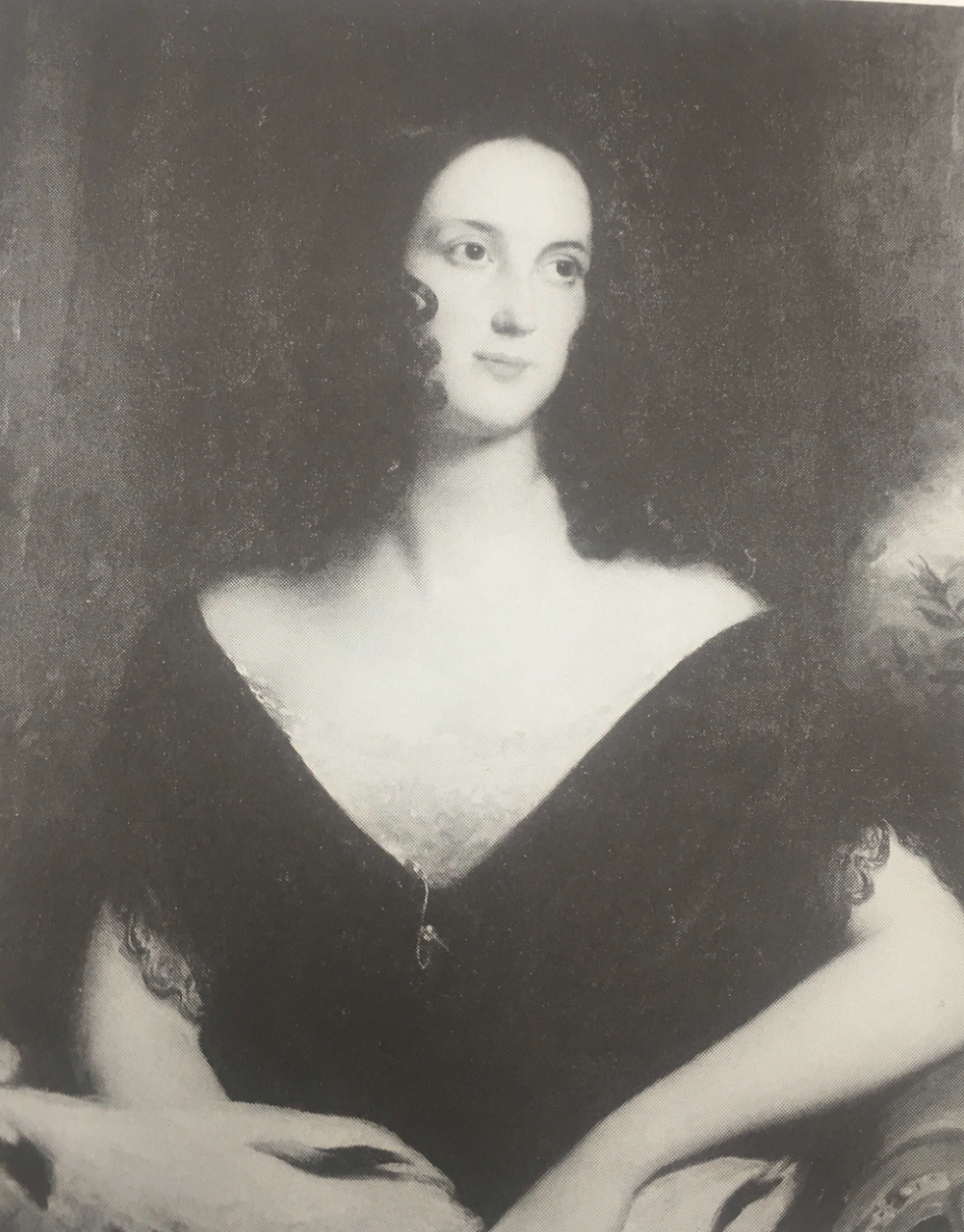
William Hamilton Hart is initially in business with Sholter and Co, Madras, but joins Binney and Co., in 1836. He is successful in business and becomes High Sherriff of Madras at a young age from 1833, a position he keeps for a number of years. He is elected a member of the Highland Society of London in 1831 and is listed as a member of its Madras Branch too – holding onto his Scottish heritage, even though he was himself born in Madras.

Nevertheless he struggles with his health – and in particular his weight, which is evidenced in later photographs and also the following extract from a letter from his father dated 28 June 1839:
“The health of William [Hamilton Hart] failed him so much during the last year that he was obliged to embark in August last for China, but he returned in December with renovated health. He has however got very large, and I much fear that he will never have much good health in India, and in that case, I have requested him to return to England but a share in the firm of Binney & Co is so good a thing, that he will part with it very reluctantly; he has also four children to provide for and may have many more…”
The Hart family have business as merchants between London, India and the Australian colonies – including a scheme to encourage Indian immigration to Australia to meet labour shortages, and also the export of horses to New South Wales – which would come to be known as ‘Walers’.
William Hamilton Hart, together with his wife Fanny and children, travels to Sydney in 1842 where he is Inspector of the Bank of Australasia. He returns however to England in 1849 and at some point Fanny and the children, at least, end up living in Brussels where Fanny dies on 25 October 1851.
In 1853, “William Hamilton Hart, said to be at a loose end in London, was ‘hailed by one of the Brights from his Club window’ and asked to go to Melbourne to reorganise an ailing business under the new name of Bright Bros… So, in 1853, the widowed W.H. Hart took his children … and his widowed mother Camilla, to live in Melbourne. They sailed as First Cabin passengers on the Bloomer, leaving Liverpool on 19 March and arriving on 5 July 1853 with two servants.” (Source: Fido and Friends)
As head of Bright Brothers and Co., he was very successful and was also appointed by Governor of Victoria, Sir Charles Hotham, to membership of the 1853 Royal Commission investigating into the financial state of the Colony.

His mother Camilla Porterfield Paterson, born in Madras in 1787, is 76 when she makes the journey to live with her son in the newly proclaimed city of Melbourne. She dies four years later on 6 September 1857 in Toorak, and is buried in the Melbourne General Cemetery. Although she is not the earliest of my forebears to travel to Australia (because she travels in old age) she is nevertheless the earliest generation: my 5xgreat grandmother.
William Hamilton Hart and Fanny Lloyd’s daughter – Camilla Rose Hart – is of the last generation to be born in Madras, on 25 November 1834. This neatly marks a century too since Roderick Forbes arrived in Madras to take up his Ensign commission in February 1735.

Camilla Rose Hart dies in childbirth at her father’s house in South Yarra, ‘Balmerino’ (which is no longer standing, but a road is named after it), on 9 May 1860 at the age of 25. The family still possess a life-size portrait of her, dressed in mourning-black, commissioned perhaps after her death in remembrance.
Camilla’s son, Mongatu Selwyn Smith, after an education at Geelong Grammar School and then Clifton College in England, moves to Queensland where he settles as a Stock and Station Agent in Beaudesert. He marries the daughter of Frederick Augustus Forbes, third Speaker of the Queensland Legislative Assembly, whose own family story in India began this account. The family remains in Queensland and did not return to Melbourne until the 1960s.


I've been fascinated with firsthand "real" accounts. This one was one of the finest.
Fascinating read Al. Also very easy to navigate. Congratulations!