Part Two: the Paterson/Porterfield Family

Updated: Jun 16, 2025
Sex Scandals, Seringapatam, Arthur Wellesley and a Deadly Duel...
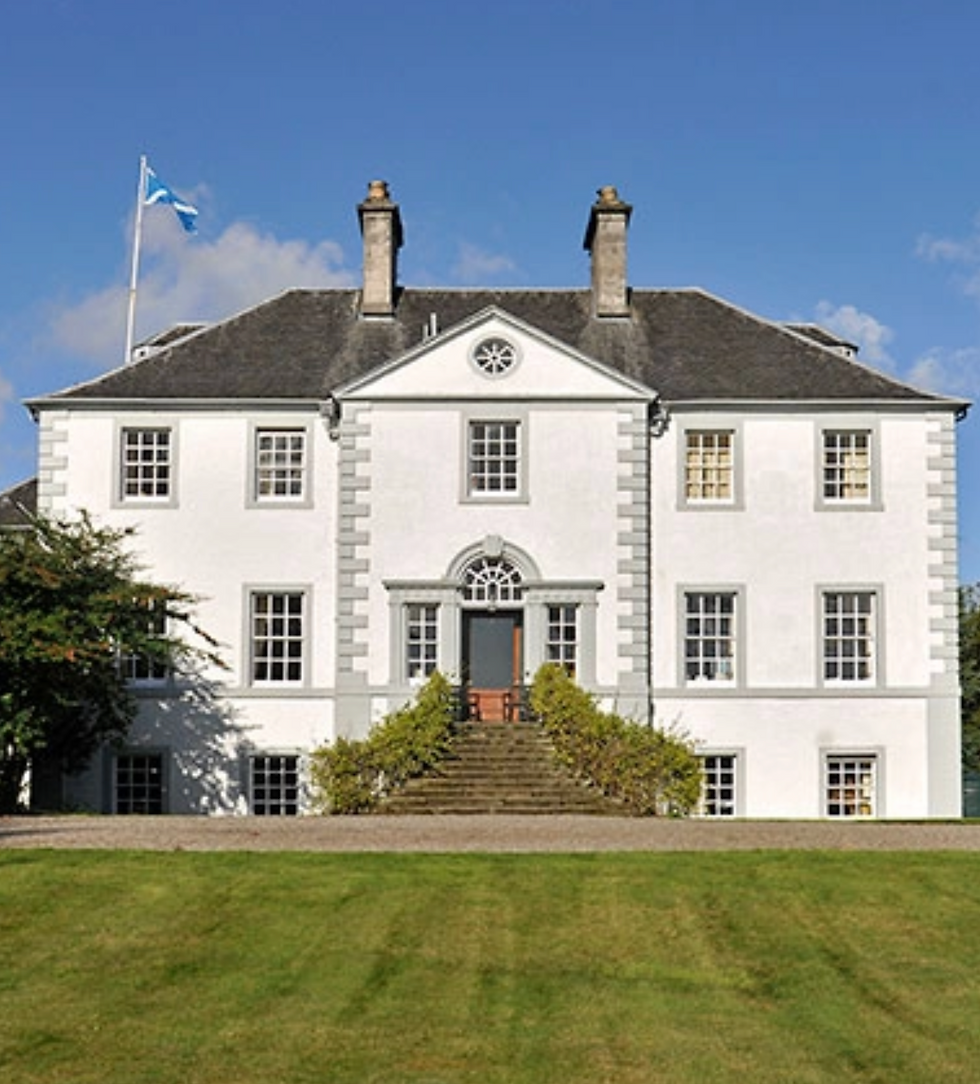
Returning to Scotland, the Porterfield family were minor gentry of the 18th century based at Duchal House, which still stands, in Renfrewshire near Glasgow.
Our story begins with a young girl named Anne Porterfield (born 1765), the daughter of Boyd Porterfield (1724-95) of Duchal House, who at age 19 became infatuated with a young officer named James Turnbull who was on leave from India and whom she meets at a party on the Estate of her mother’s family at Craigends.
Anne elopes with the young lieutenant to Calcutta in 1784, hotly pursued by her cousin Claud Alexander (who, with his brother Boyd who would also become Anne’s brother-in-law, is famously depicted in a portrait by Zoffany). The purpose of Claud Alexander's pursuit was his intent to see the couple married legally in Calcutta by the local chaplain at Fort William – which they are on 24 June 1784.

Anne, however, quickly turns her affections to her cousin Claud and declares her love for him – but this is not requited, and Claud arranges for her to return to Scotland and to her father’s house. Claud is not impressed by Anne, “she writes rather like a Covent Garden Girl than a virtuous lady,” he corresponds with his brother Boyd.
Despite her marriage to James Turnbull – whom she promptly abandons – and her cousin’s designs to return her to Scotland, it seems that Anne evades both and makes her way south to Madras where she meets and eventually marries (after Turnbull’s death on 2 March 1787) a young officer of the 19th Light Dragoons, the first cavalry regiment in India, Thomas Paterson.

Thomas and Anne’s first son, John Floyd Paterson, was born in Madras in 1786 – when Anne was still legally married to James Turnbull. ‘John Floyd’ is the namesake of Paterson’s commanding officer in the 19th LDs – and father-in-law of future Prime Minister Robert Peel. John Floyd Paterson explicitly names Thomas Paterson and Anne (nee Porterfield) as his parents in his will – however his younger brother Alexander in his will of 1810 conspicuously omits any provision for John Floyd Paterson and his eldest sister, my 5xgreat grandmother, Camilla Porterfield Paterson born 27 November 1787, but names instead the other siblings as “all children procreated of the marriage between the said Lt Col Thomas Paterson, and Mrs Ann Porterfield, or Paterson.”
Both John Floyd Paterson and Camilla Porterfield Paterson were born and conceived before the death of Anne’s first husband James Turnbull and therefore before any possible marriage between Anne and Thomas Paterson – and although both children always looked to Anne and Thomas as their natural parents, this cannot be entirely certain.
Anne was also reputed to be a lover of another young officer in India, the Hon. Arthur Wellesley the future Duke of Wellington. Wellesley was known in his youth to have had a number of affairs with the wives of fellow officers, and was a friend of Thomas Paterson and fought alongside him in a number of engagements as his ‘Comrade in Arms’.

Some decades later the Paterson and Wellesley families would be thrown together again in a scandal that rocked London society. Thomas Paterson’s daughter Helena Bligh began a public and high-profile affair in 1823 with the Duke of Wellington’s nephew, the notorious rake William Pole-Tylney-Long-Wellesley. They married in 1828 but she was soon abandoned and left destitute, even though she assumed from him the title ‘Countess of Mornington’ in 1845. The Pall Mall Gazette gives the following account of her life following her death in 1869:
“Her story is sad and pitiful. She was the daughter of Colonel Paterson, and granddaughter of a Scottish house of large property in Renfrewshire. Her first husband was Captain Bligh, of the Coldstream Guards. Early left a widow, in 1828, when little more than thirty years of age, she married the Hon. William Pole Tylney-Long-Wellesley, then the only son of Lord Maryborough, who had already gained the reputation of having broken one wife’s heart and squandered the greater part of the property which had come to him by marriage from the Tylneys and the Longs. In course of time Mr Long-Wellesley became Earl of Mornington, and head of the House of Wellesley; and when, some ten years ago, that nobleman died, a pensioner on the charity of his relatives, in an obscure lodging-house near Marylebone-lane, his poor wife had once, if not more than once, appeared at a metropolitan police court as a suppliant for public charity. Of late years nothing had been heard of her till the notification of her death the other day. She had attained her seventy-fifth year.”

Alongside the young Arthur Wellesley, who was then Lt Colonel of the 33rd Regiment of Foot, Thomas Paterson, then a Captain in John Floyd’s 19th Light Dragoons, participated in one of the most decisive battles which assured the ascendency of the British in India – the Battle of Seringapatam in 1799 which led to the defeat of the ‘Tiger of Mysore’ Tipu Sultan.
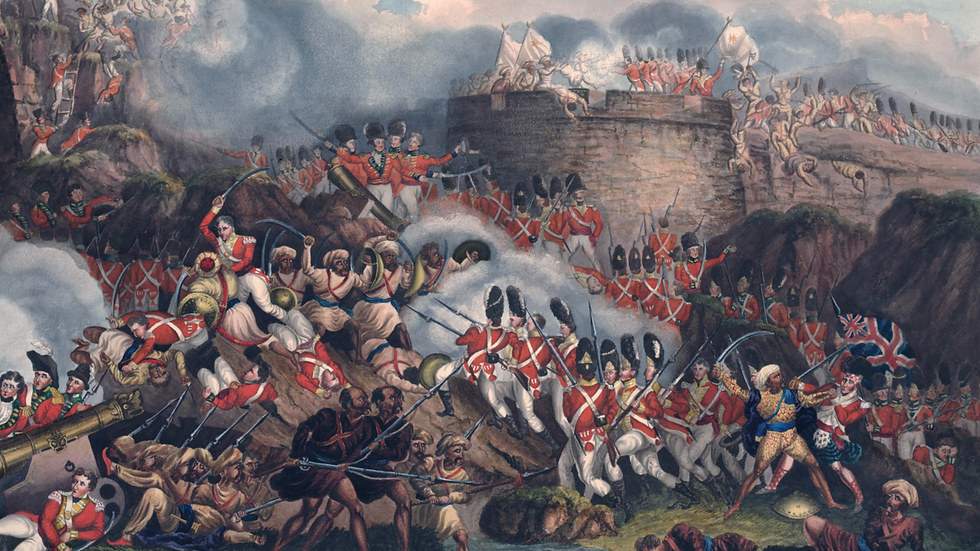
Following Seringapatam, Thomas Paterson was involved in a number of skirmishes and follow-through campaigns alongside Arthur Wellesley. One involved the “noted freebooter” Dhondia Waugh who had been set free by the British as a prisoner of Tipu following Seringapatam, but then proceeded to gather a small guerrilla force and harass the British. They were defeated finally on 10 September 1800 by a force under the overall command of Wellesley, which included the 19th Light Dragoons commanded by Thomas Paterson now promoted to Major, and Dhoondia’s body was found and brought into camp on the galloper gun of the 19th.

Again in January 1802, Wellesley and Paterson join forces in Chinroypatam to resist the feudal rulers who’d filled the vacuum after Tippoo’s overthrow and refused to submit to the British, including the ‘Rajah of Bullum’. The campaign was a great success and suffered very few losses, and the 19th Light Dragoons under the command of Major Thomas Paterson is particularly noted for special mention to the Commander-in-Chief by Wellesley. However after the fighting sickness breaks out amongst the men and they are moved back to Cheyloor and then to Arcot.
I visited Arthur Wellesley's house in Fort St George during my trip - it is almost completely overtaken by trees with nothing to identify it as the residence of one of the foremost military commanders of history, in the place where he 'cut his teeth' on the early Indian campaigns. In fact, there was almost a sense of benign violence to his memory and legacy - as the trees encroached and took back their place; not uncommon of many of the colonial and Company sites in India.
Arthur Wellesley's House in Fort St George Arthur Wellesley's House in Fort St George
In September 1803 the 19th Light Dragoons are commanded by Arthur Wellesley at the famous Battle of Assaye, however by this point Thomas Paterson had transferred to the 22nd Light Dragoons where he was Lt Colonel in command of a regiment that included his own son John Floyd Paterson, then a Lieutenant.
Thomas Paterson retires as a Lt Colonel of the 22nd Light Dragoons on 14th October 1805 and from at least 1815 is recorded as living in the fashionable neighbourhood of Upper Seymour Street, London.
Notwithstanding the unfortunate Helena, a number of the Paterson children remain in India, including the first son John Floyd Paterson who rises to be Lt Colonel of the 13th Light Dragoons; George Paterson, who dies young, of the East India Company’s service; Captain Thomas William Paterson who moves to Van Dieman’s Land with the 63rd Regiment in 1830, and whose father-in-law (Lt Colonel William Shirrif of the 7th Madras Native Cavalry) was married to his sister-in-law (Mary Hart 1765-1851 sister of William Main Hart, of whom more in the next Part); Frederick Thomas Paterson who retires from the Bengal Native Infantry in 1850; Mary Christian Paterson who marries the Presidency Paymaster James Archibald Casamajor of a very old Madras family, and whose daughter Jane marries the 3rd Earl of Enniskillen; and Camilla Porterfield Paterson of whom more will be said through her marriage to Madras merchant William Main Hart. Another daughter, Mary Anne Paterson, marries Admiral William Shepheard who served with distinction on ‘Temeraire’ at the Battle of Trafalgar and was specially commended by that ship’s commander Sir Eliab Harvey.
As a postscript to the life of Lt Colonel Thomas Paterson – it appears he at some point separates from his wife Anne (records suggest she returns to Scotland) and spends his final years living in Paris, at No.8 Rue des Champs Elysees. Witnesses to his final will made there in 1839 are Thomas James Thackeray (second-cousin of writer William Makepeace Thackeray) and his servant Jane Jones. He leaves all his estate to his wife Anne, but entreats upon her affections to make good “out of her own property” any debts he may have owing! He dies in Paris on 21 August 1841and is buried at Montmartre.
A final post-postscript: On the 18 February 1841, just six months before Thomas Paterson’s death, one of the last duels in England takes place at the back of the Eyre Arms Tavern between a Colonel Paterson ‘of the East India Service’ and another gentleman, Robert Mark Marsden. Occasioned by an argument over Irish politics, it ended with the Colonel severely injured. Remarked upon in Parliament, the London ‘Morning Post’ contained the following account:
“On Thursday a hostile meeting took place between Colonel Paterson, of the East India service, and Robert Mark Marsden, Esq. of Park Lodge, Regent’s Park. The parties met in a field at the back of the Eyre Arms Tavern, at daybreak, and exchanged shots without effect. The seconds then interfered, and endeavoured to reconcile the gentlemen; but, not succeeding, the parties were again placed on the ground. At the second fire the ball from Mr. Marsden’s pistol took effect on the right wrist of the gallant Colonel, which was severely shattered. The affair then terminated. The misunderstanding arose from a political dispute between the parties, the Colonel having asserted at a dinner party, in the presence of Mr M., that the supporters of Mr O’Connell were ‘political scoundrels’…”

Was this our Thomas Paterson? I have found no other ‘Colonel Paterson’ in the service of the East India Company to whom it could refer, apart from his son John Floyd Paterson. The elder Colonel Paterson would have been 80 years old – perhaps too old for duelling, although records suggest he was also originally from Ireland. It may have been this encounter which finished him off, dying in Paris six months later.


Comments